
OUR THREE-PILLAR FRAMEWORK

NCInnovation delivers outcomes through a clear, three-pillar framework that moves university inventions from discovery > diligence > deployment. The pillars are designed to work as a pipeline: Pipeline Development (pre-award, building deal-flow and readiness), Core NCI (award execution and hands-on commercialization), and Commercial Transition (post-award services that carry projects into the market). Together, they standardize how we support universities, tighten industry linkages, and create a repeatable path from research to jobs.
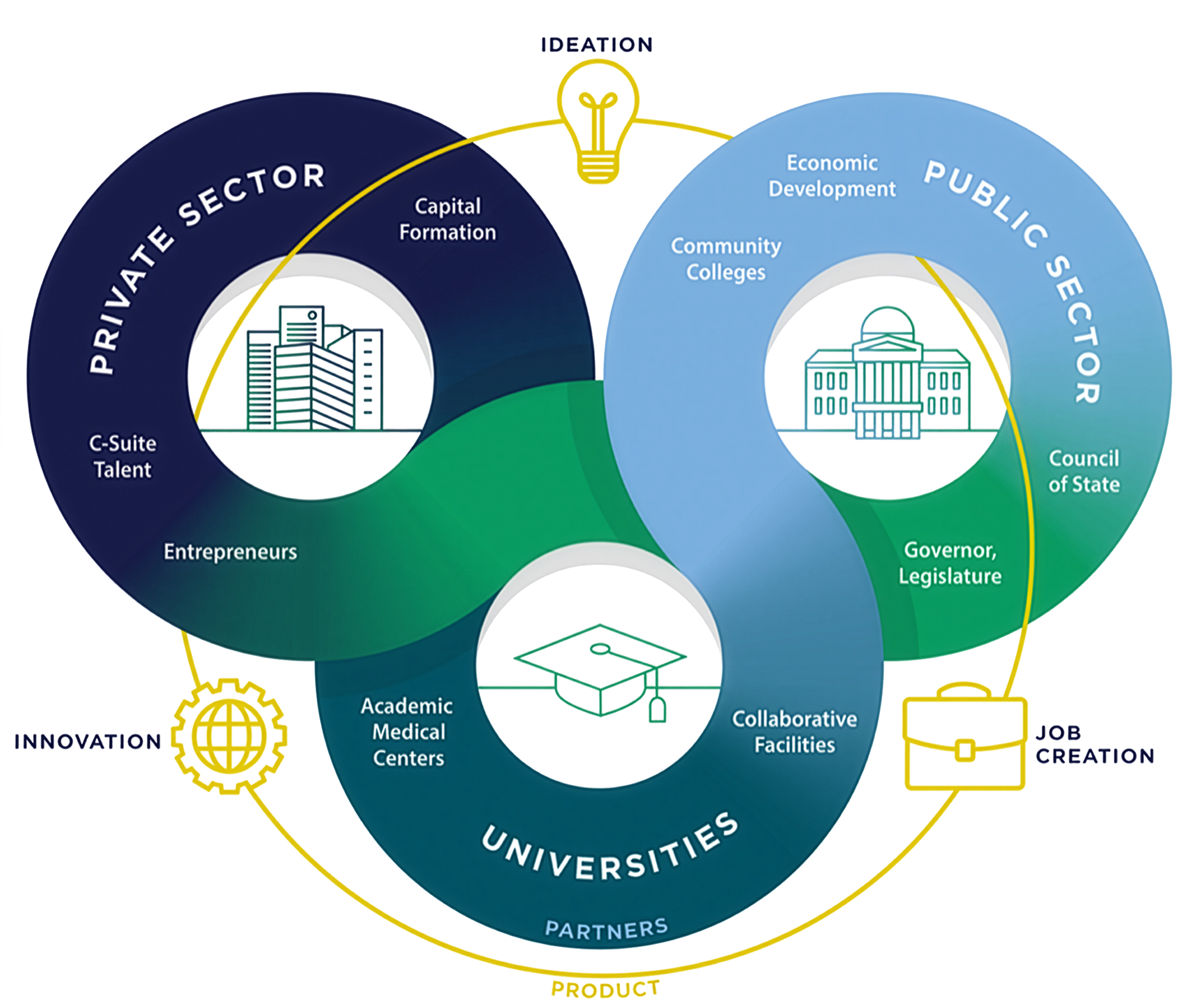

NCI three pillar framework graphic showing three circles - private sector, public sector and universities - merging
Pillar 1

Pipeline Development 

Purpose: Build a steady flow of viable, market-pulled projects and raise faculty readiness so more proposals clear due diligence quickly.

What it includes:

  • NCI Hub Directors & Senior Regional Directors coordinate pipeline activities on campus and across ecosystems.

  • Faculty training & workshops demystify commercialization (summer workshop series, lunch-and-learns, and cohort programs at partner sites).

  • Pipeline funding advances promising university ideas (>TRL 3) toward NCI grant readiness.

  • Support services enable early de-risking through third-party technology assessments, market research, and IP discovery/protection.

  • Capacity-building investments aligned to regional strengths (e.g., innovation hubs, institutes) grow campus infrastructure in key clusters.

  • Regional engagement with chambers, EDCs, and strategic partners makes industry needs visible to faculty.

  • Industry engagement mechanisms (e.g., reverse pitches) translate real corporate problems into research and startup opportunities.

This pillar ensures universities have a clear “front door,” faculty have tools to evaluate commercial fit, and early wins better prepare teams for NCI’s statewide RFP.

Learn more about Pillar 1

Pillar 2

Core NCI Activities

Purpose: Award grants and provide wraparound support through on-the-ground leadership and expert coaching so teams hit milestones on time and with market discipline.

What it includes:

  • NCI Hub Directors & Senior Regional Directors coordinate on campus and across ecosystems.

  • Grant funding via the statewide RFP cycles resource commercialization projects with technology readiness levels (TRLs)  3–6.

  • Research & strategy (asset mapping, technology domain strategy, and statewide analyses) align awards with comparative advantages.

  • Regional EIRs (via statewide partners) and Project EIRs (embedded with each award) drive customer discovery, product strategy, and capital readiness.

  • MBA fellows produce commercialization roadmaps, market entry plans, and operational playbooks.

  • Industry connect activities (showcases, targeted convenings) pair funded teams with customers and strategic partners.

This pillar is the engine room: staff, grants, analysis, and expert operators work side-by-side with faculty to translate funded research into pilots, licenses, or venture-backable companies.

Learn more about Pillar 2

Pillar 3

Commercial Transition (Post-Award to Market)

Purpose: Carry successful awardees through the “last mile” so promising technologies don’t stall after the grant ends.

What it includes:

  • Post-grant C-suite support to place interim leadership (CEO/CFO/CTO) where needed.

  • Investor connections (e.g., investor days) that match projects with angels, seed funds, and strategic capital.

  • Shared services to handle legal/compliance, finance, HR/talent, IT, and go-to-market planning - letting technical teams focus on customers and product.

  • Mentorship to guide production of commercialization roadmaps, market entry plans, and operational playbooks.

  • Ongoing industry connections (mentors, showcases) to convert demonstrations into purchase orders and partnership agreements.

This pillar prevents “valley-of-death” drop-off by surrounding awardees with the people, processes, and capital pathways required to launch and scale in North Carolina.

Learn more about Pillar 3