

WHY IT MATTERS
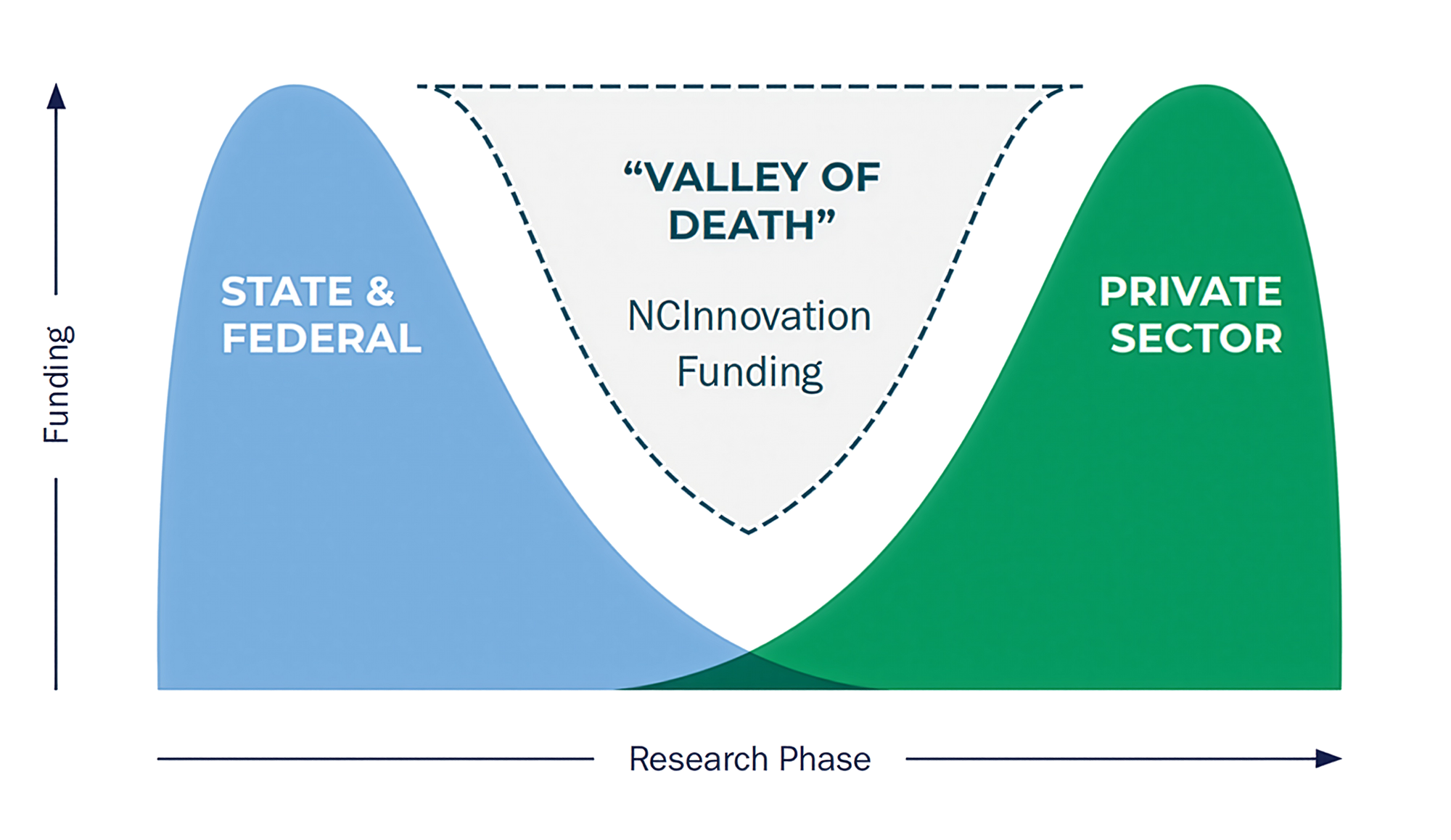
Many promising technologies stall between a working prototype and production—the “valley of death.” This pillar focuses on the second part of that journey: getting into the field, proving reliability, and securing first customers — so breakthroughs launch and scale in North Carolina.
NCInnovation’s commercial transition pillar operates based on the following principles:
| Evidence first |
Decisions consider technology readiness, customer feedback, regulatory steps, and transaction readiness. |
| Two critical gaps |
GAP 1: Early R&D (roughly TRL 3–6) → supported through NCI Core Grants (Pillar II). GAP 2: Product & process (roughly TRL 6–8) → supported here through non-dilutive services and vouchers with partner facilities. |
| Do not just advise |
Our commercialization partners provide hands-on execution (pilots, contracting, regulatory support, UI/UX, investor readiness). |
| Integrity built in |
Strong conflict-of-interest, procurement, and data-governance standards. |
| Statewide access |
| We work across regions and partner with local ecosystems to deliver support close to where teams operate. |
HOW IT WORKS
| Commercialization Inflection Point (CIP) decision |
Within 30 days of grant close, NCI determines whether a project is ready to enter Commercial Transition. |
| 4–6-week Commercialization Plan |
NCI and the team create a concise plan that includes pilot scope, customer onboarding steps, manufacturability/quality actions, and near-term milestones. |
| Commercialization Studio Engagement (≈9+ months) |
Teams work with a vetted Commercialization Studio for execution support:
|
| Targeted, non-dilutive vouchers |
Eligible teams may access time-boxed vouchers to cover critical, near-term commercialization needs with partner cost-share. |
| Progress gates that signal real traction |
|

EXPECTED OUTCOMES
Success looks like...
Executed pilots that meet the agreed performance metrics
First customers or executed licenses within 12 months of the grant close
Clear steps to scale in North Carolina—suppliers, partners, and facilities identified